
Asia-Pacific Wellness Tourism Market to Hit USD 310.56 Billion by 2031, Driven by Growing Demand for Wellness Retreats, Says Mordor Intelligence
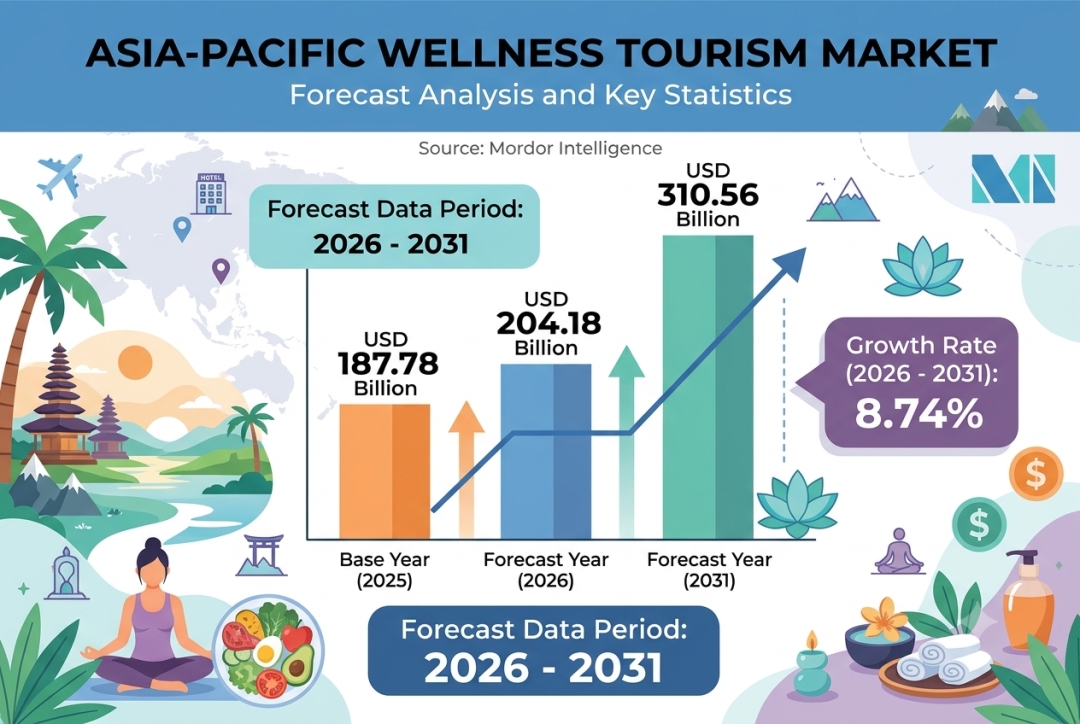
Hyderabad, India, November 03, 2026: According to Mordor Intelligence, the Asia-Pacific wellness tourism market size was valued at USD 187.78 billion in 2025 and is estimated to grow from USD 204.18 billion in 2026 to reach USD 310.56 billion by 2031, registering a CAGR of 8.74% during the forecast period (2026-2031). The market is gaining momentum as travelers increasingly prioritize physical health, mental well-being, stress management, and preventive healthcare when selecting holiday destinations. Countries across the region are attracting domestic and international visitors through traditional healing practices, wellness resorts, spa treatments, meditation programs, and nature-based retreats.
The Asia-Pacific wellness tourism market is supported by the region’s established traditions in Ayurveda, Traditional Chinese Medicine, yoga, meditation, and other holistic wellness practices. Rising disposable incomes, improving tourism infrastructure, and greater awareness of preventive health are encouraging travelers to incorporate wellness activities into their holidays. Hotels, resorts, and specialized retreat operators are expanding their wellness offerings to serve visitors seeking both relaxation and structured health-focused experiences. These developments are creating opportunities for hospitality companies and destination operators to strengthen their presence in the regional wellness tourism industry.
Asia-Pacific Wellness Tourism Market Growth Drivers
Growing Demand for Preventive Healthcare and Holistic Wellness
Increasing awareness of preventive healthcare is encouraging travelers to choose holidays that support long-term physical and mental well-being. Consumers are showing interest in programs that combine relaxation with nutrition guidance, fitness activities, traditional therapies, and stress management. Wellness retreats are responding by offering personalized packages that address individual preferences and health goals. Ayurveda-based treatments in India, traditional therapies in China, and nature-oriented wellness experiences in Japan are attracting visitors interested in culturally rooted approaches to health. This preference for preventive wellness is supporting demand for specialized tourism services across the region.
Rising Interest in Digital Detox and Mental Wellness Retreats
Growing screen exposure, demanding work schedules, and workplace stress are increasing interest in holidays that provide opportunities to disconnect from digital devices. Digital-detox escapes and mental-wellness retreats are gaining attention among travelers seeking peaceful environments, guided meditation, mindfulness sessions, and outdoor activities. Resorts are incorporating technology-free accommodation spaces, wellness consultations, yoga sessions, and nature-based programs into their packages. Corporate wellness retreats are also gaining relevance as employers look for travel-based activities that support employee relaxation and mental health. These changing preferences are creating additional opportunities for specialized wellness tourism providers.
Integration of Traditional Healing Practices into Tourism
Traditional healing systems remain an important attraction for wellness travelers visiting Asia-Pacific destinations. India’s Ayurveda, yoga, and naturopathy offerings, China’s Traditional Chinese Medicine, and Japan’s onsen and forest-bathing experiences provide distinctive tourism experiences rooted in local culture. Government support for traditional medicine and wellness tourism is helping destinations promote these services to international visitors. Accommodation providers are also collaborating with wellness practitioners to introduce authentic treatments, consultation programs, and longer-stay packages. The integration of cultural heritage with hospitality services is strengthening destination differentiation and supporting the regional wellness tourism market growth.
Expansion of Nature-Based and Premium Wellness Accommodation
Travelers are increasingly considering natural surroundings, accommodation quality, and personalized services when selecting wellness destinations. Eco-wellness lodges, boutique retreats, and wellness hotels are attracting visitors seeking peaceful locations, sustainable practices, and customized experiences. Properties are incorporating locally sourced food, outdoor fitness activities, meditation spaces, and nature-based therapies into their offerings. Luxury hospitality groups are also expanding wellness-focused accommodation concepts to attract premium travelers. This demand is encouraging operators to develop differentiated properties that combine comfortable stays with holistic wellness programs.
Access This Report in Japanese: https://www.mordorintelligence.com/ja/industry-reports/asia-pacific-wellness-tourism-market?utm_source=abnewswire
Asia-Pacific Wellness Tourism Market Segmentation Analysis
The Asia-Pacific wellness tourism industry is segmented by service type, traveler type, accommodation type, and geography, reflecting differences in visitor preferences, treatment requirements, and accommodation choices.
By service type, the market includes:
-
Yoga and meditation retreats: Attract travelers seeking mindfulness, relaxation, spiritual development, and structured fitness activities.
-
Spa and beauty therapies: Include massages, skincare treatments, body therapies, and relaxation services offered through hotels and dedicated wellness facilities.
-
Naturopathy and detox packages: Focus on natural treatments, dietary programs, cleansing experiences, and holistic health practices.
-
Mental-wellness retreats: Address stress management, emotional well-being, mindfulness, and relaxation.
-
Digital-detox escapes: Provide technology-free experiences through nature activities, meditation, and wellness-focused accommodation.
-
Spiritual healing journeys: Combine cultural traditions, spiritual practices, and guided wellness experiences.
By traveler type, the market covers primary wellness travel and secondary wellness travel. Primary wellness travel includes trips planned mainly around health and wellness objectives, including dedicated retreats and treatment programs. Secondary wellness travel involves visitors incorporating spa treatments, yoga, meditation, and other wellness activities into regular leisure or business trips.
By accommodation type, the market includes yoga retreats, chain wellness hotels, boutique retreats, eco-wellness lodges, and wellness clinics with stay. These categories serve different requirements, ranging from dedicated wellness programs to premium hospitality experiences and accommodation linked to specialized treatments.
Explore Our Full Library of Hospitality and Tourism Research Reports: https://www.mordorintelligence.com/market-analysis/hospitality-and-tourism?utm_source=abnewswire
Asia-Pacific Wellness Tourism Market Geography Analysis
China holds an important position in the regional market, supported by domestic tourism demand, traditional medicine practices, and established wellness facilities. Its combination of modern hospitality infrastructure and traditional treatments continues to attract visitors interested in health-focused travel.
India benefits from its established Ayurveda, yoga, meditation, and naturopathy offerings. Destinations such as Kerala and Himalayan wellness locations attract international visitors seeking traditional therapies and extended wellness stays. Japan draws visitors through onsen experiences, forest bathing, traditional hospitality, and relaxation-oriented tourism. Australia benefits from natural landscapes, wellness retreats, and established hospitality services, while South Korea attracts visitors through wellness facilities and its growing healing-tourism offering.
Southeast Asia, including Singapore, Malaysia, Thailand, Indonesia, Vietnam, and the Philippines, benefits from tropical destinations, spa facilities, cultural experiences, and nature-based retreats. The Rest of Asia-Pacific also contributes through emerging wellness destinations and specialized tourism offerings. Together, these countries support the regional market’s diverse service and accommodation landscape.
Key Players in the Asia-Pacific Wellness Tourism Industry
The competitive landscape includes international hotel groups, luxury resort operators, specialized wellness destinations, and independent retreat providers. Companies are focusing on expanding wellness-oriented accommodation, strengthening service portfolios, and developing experiences that combine traditional therapies with premium hospitality.
Major companies operating in the Asia-Pacific wellness tourism market include Accor, Marriott International, Hilton Worldwide, Hyatt Hotels Corporation, InterContinental Hotels Group (IHG), Banyan Tree Holdings, Minor International (Anantara / Avani), Six Senses Hotels Resorts Spas, Aman Group, Mandarin Oriental Hotel Group, Shangri-La Group, The Indian Hotels Company (IHCL – Taj / Vivanta), Chiva-Som International Health Resort, COMO Hotels and Resorts, Rosewood Hotel Group, Centara Hotels & Resorts, Dusit International, Gwinganna Lifestyle Retreat, Ananda in the Himalayas, and Kamalaya Koh Samui.
These companies compete through wellness-focused accommodation, personalized guest services, traditional treatments, spa facilities, and specialized retreat programs. International hotel groups benefit from established distribution networks and brand recognition, while dedicated wellness operators differentiate themselves through specialized programs and destination-specific experiences. Their continued focus on wellness services is expected to influence competitive positioning across the region.
Market Outlook
The Asia-Pacific wellness tourism market is expected to maintain its growth trajectory as travelers increasingly prioritize preventive healthcare, mental well-being, traditional therapies, and personalized holiday experiences. Demand for digital-detox escapes, specialized retreats, and nature-based accommodation is creating opportunities for hospitality groups and dedicated wellness operators. Regional destinations also benefit from established healing traditions, improving tourism infrastructure, and growing interest in culturally distinctive experiences.
According to Mordor Intelligence, the Asia-Pacific wellness tourism market size will remain an important indicator of the industry’s development as competition expands across service categories and destinations. Businesses that deliver authentic treatments, consistent service quality, and differentiated wellness experiences are positioned to benefit from changing traveler preferences.
For more insights on this market, please visit the Mordor Intelligence page: https://www.mordorintelligence.com/industry-reports/asia-pacific-wellness-tourism-market?utm_source=abnewswire
About Mordor Intelligence
Mordor Intelligence is a global market intelligence firm, founded in 2014, helping businesses make informed decisions through data-driven insights, industry expertise, and advanced analytics. With 550+ domain experts and on-ground specialists across 150+ countries, the company delivers comprehensive intelligence across aerospace & defense, agriculture, automation, automotive, chemicals & materials, consumer goods & services, electronics, energy & power, financial services, food & beverages, healthcare, hospitality & tourism, information & communications technology, and logistics.
Its offerings include syndicated industry reports, custom research and advisory, and subscription platforms such as Synapse, Data Center Intelligence, and Robotics Intelligence. Mordor Intelligence is ISO 9001:2015 and ISO/IEC 27001:2022 certified, a member of ESOMAR and the Market Research Society of India, and a four-time Great Place to Work® honoree. Learn more at mordorintelligence.com.
For any inquiries or to access the full report, please contact:
https://www.mordorintelligence.com
Media Contact
Company Name: Mordor Intelligence
Contact Person: Jignesh Thakkar
Email: Send Email
Phone: +1 617-765-2493
Address:11th Floor, Rajapushpa Summit, Nanakramguda Rd, Financial District, Gachibowli [email protected]
City: Hyderabad
State: Telangana 500008
Country: India
Website: https://www.mordorintelligence.com/


